
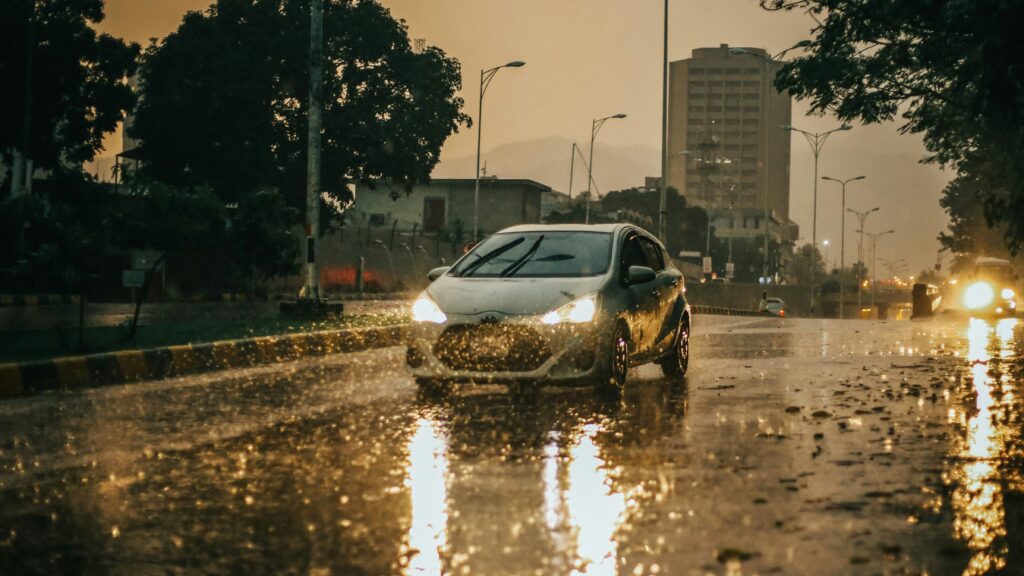
Driving across Europe often means navigating unpredictable weather. Whether you are cruising down the French Autoroute, tackling a British motorway, or pushing pace on the German Autobahn, a sudden downpour can turn a smooth journey into a high-stakes challenge.
When visibility drops and the road surface becomes slick, your safety depends on two things: your driving habits and the quality of your equipment. Here are 10 essential safety tips for navigating heavy rain on European highways.
1. The “Double the Distance” Rule
On dry European motorways, the standard “two-second rule” applies. In heavy rain, you must double this to at least four seconds. Water significantly increases your braking distance, and the spray from vehicles in front creates a “mist zone” that hides brake lights.
2. Trust Your Eyes, Not Just Your Sensors
Modern European cars feature automatic headlights and wipers, but they aren’t foolproof. In heavy spray, automatic lighting systems may not always provide optimal visibility cues for following drivers. Manually turn on your dipped headlights to ensure drivers behind can see you through the mist.
3. Beware of Aquaplaning (Hydroplaning)
Aquaplaning occurs when a layer of water builds up between your tyres and the road, causing you to lose steering control. If the steering suddenly feels “light” or disconnected:
- Do not hit the brakes.
- Ease off the accelerator.
- Keep the steering wheel straight until you regain grip.
4. Use Rear Fog Lights Wisely (and Legally)
In many EU countries, it is legal (and recommended) to use rear fog lights when visibility is significantly reduced (typically under ~50 — 100 meters depending on country). However, remember to turn them off once visibility improves; otherwise, you risk dazzling drivers behind you and masking your own brake lights.
5. Inspect Your “First Line of Defence”
Your wiper blades are the most critical safety component in a storm. If your wipers are streaking, squeaking, or leaving “blind spots,” they are already failing you.
QEEP Tip: European weather is harsh on rubber. Ensure your blades are made of high-grade synthetic rubber or silicone to maintain a clean sweep even at high motorway speeds.
6. Avoid the “Cruise Control” Trap
Never use cruise control on wet roads. It can prevent your car from detecting wheel slip, potentially causing the vehicle to accelerate during aquaplaning as it tries to maintain a constant speed. You need total manual control over the throttle.
7. Watch for Standing Water in the “Slow Lane”
In many parts of Europe, heavy HGVs (trucks) create slight ruts in the slow lane over time. These ruts collect deep water faster than the rest of the road. If you feel your car pulling, move slightly to a clearer part of the lane or safely change lanes if traffic permits.
8. Defog Your Windows Immediately
Rain causes a rapid drop in outside temperature, leading to instant interior fogging. Use your A/C (Air Conditioning) even if you’re set to a warm temperature—it acts as a dehumidifier to clear the windscreen in seconds.
9. Give HGVs Extra Space
Large lorries and coaches throw up massive amounts of spray that can “white out” your windscreen for several seconds as you overtake. Before passing a large vehicle, increase your wiper speed to maximum and ensure your path is clear.
10. Know When to Stop
If the rain is so torrential that you cannot see the reflective “cats’ eyes” or lane markings, it’s time to pull over. Seek the nearest Service Station or ‘Aire’. Avoid stopping on the hard shoulder unless it is a genuine emergency, as visibility issues make this a high-risk zone for collisions.
Is Your Car Ready for the Next Storm?
Safety starts with a clear view. At QEEP, we specialise in high-performance wiper blades designed to meet the rigorous demands of European driving. Don’t wait for the next storm to realize your wipers are worn out.